Programmatic advertising works by auctioning each ad impression separately while the page is still loading. The publisher's ad code sends out a bid request describing the slot and the reader's context, connected buyers return prices in real time, and the highest bid wins and renders before the reader notices anything happened. Nobody negotiates and nobody agrees on a price in advance. The whole exchange takes about a tenth of a second. This guide follows that chain in the order the impression travels.
EN
RU

Programmatic Advertising Defined
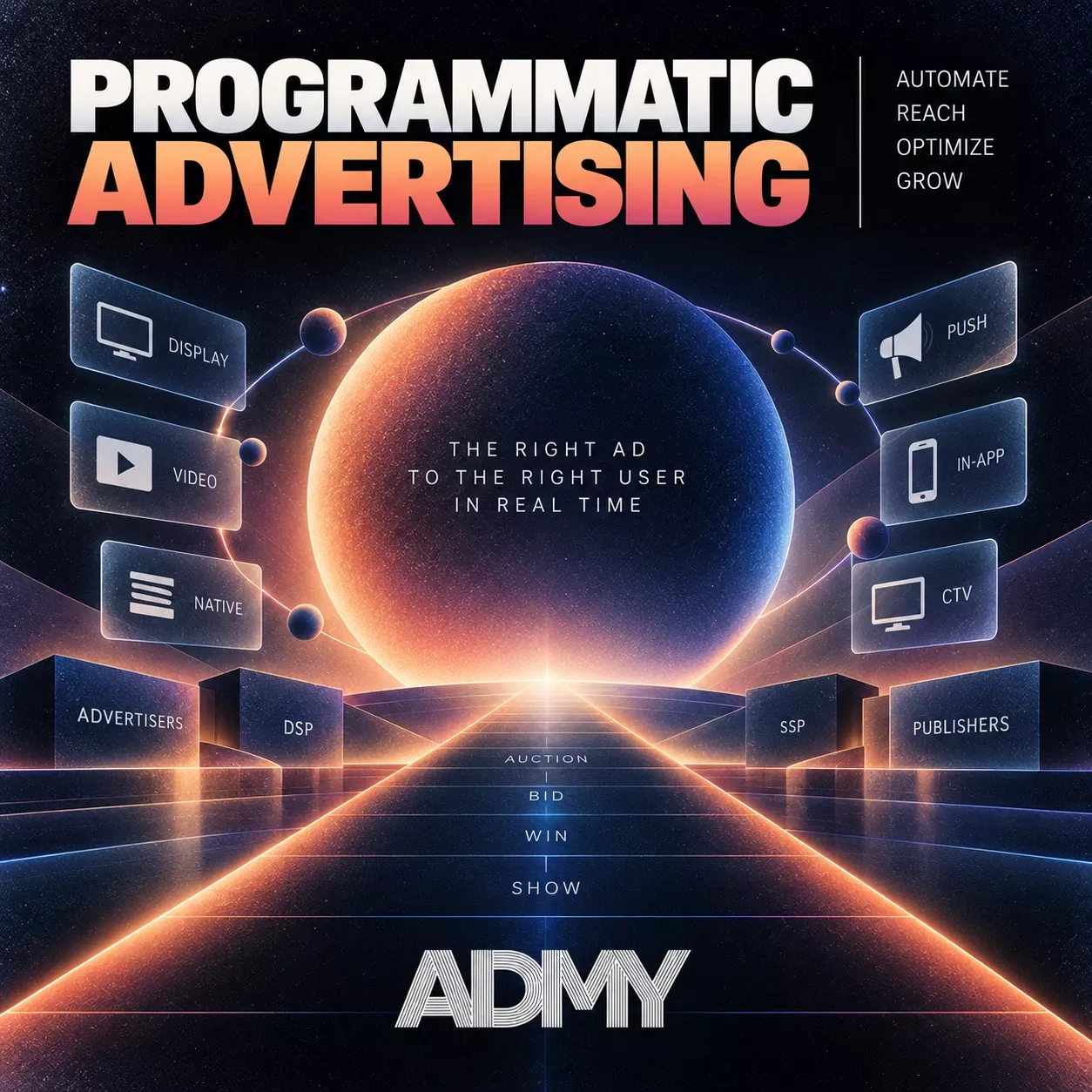
Programmatic advertising is defined by who makes the buying decision: software, inside rules a person sets. The advertiser chooses the audience, the budget, the bid limits and the creatives. The platform then decides, impression by impression, which ones to buy and at what price. In one line, programmatic advertising is a trading system for ad space where the unit of sale is a single impression.
Banners, native units, video, audio, connected TV, push and pop can all be bought this way. The format does not make a campaign programmatic. The purchase method does. A banner sold by a publisher's sales team at a monthly rate is still a banner, just not programmatic ad buying.
Advantages over direct buying
The advantages of programmatic advertising over direct buying start with price: every impression is priced on its own. Direct buying fixes one price for a placement, so an advertiser pays the same for a visitor who fits the target and for one who does not. Programmatic buying judges each visitor separately.
Speed is the second difference. Programmatic media buying replaces proposals, quotes and insertion orders with rules, so a campaign starts as soon as it is approved and connected to supply. Settings can change mid-flight.
Publishers gain too. A slot the top bidder skips still goes to the next buyer, and the price follows demand rather than a rate card set months ago. Direct deals did not disappear: programmatic guarantees kept a fixed price and reserved volume, but ran through the same systems as auction traffic.
How Real-Time Bidding Sells an Impression
Real-time bidding sells one impression through an auction that opens and closes while the page loads. It usually takes a few hundred milliseconds. The seven moves below are the open auction path, and private deals follow the same route with extra access filters.
- A user opens a page or app with an ad slot, and the publisher's ad code sends an ad request.
- The supply-side platform packs the slot, page and device data into a bid request. The format follows OpenRTB 2.6, the IAB Tech Lab standard.
- The ad exchange sends that request to connected demand-side platforms, with a deadline for the answer.
- Each DSP checks the request against its campaigns: audience, geo, format, frequency and price limits. It then returns a bid with a creative, or passes.
- The exchange picks the winner by the auction rule stated in the request, first price or second price.
- The exchange sends a win notice to the winning DSP, and the creative renders on the page. A separate billing notice follows once the impression becomes billable.
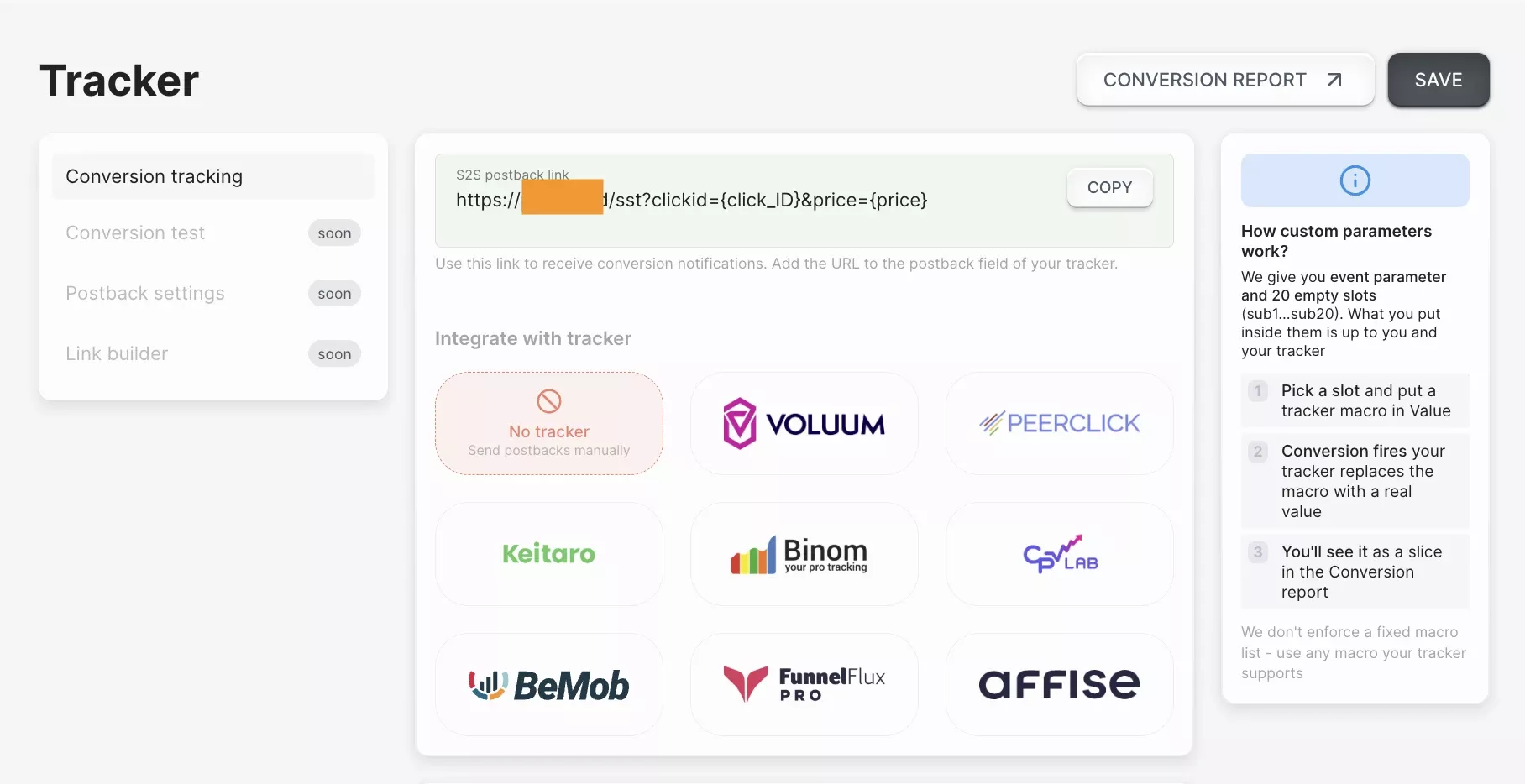
- If the user converts, a postback sends the conversion back to the buying platform. That closes the loop for reporting and bid optimization.
The exchange waits for bids only as long as the deadline in the request allows, network latency included. A late bid counts as no bid. Platform latency therefore limits how much inventory a buyer can win.
Inside the bid request
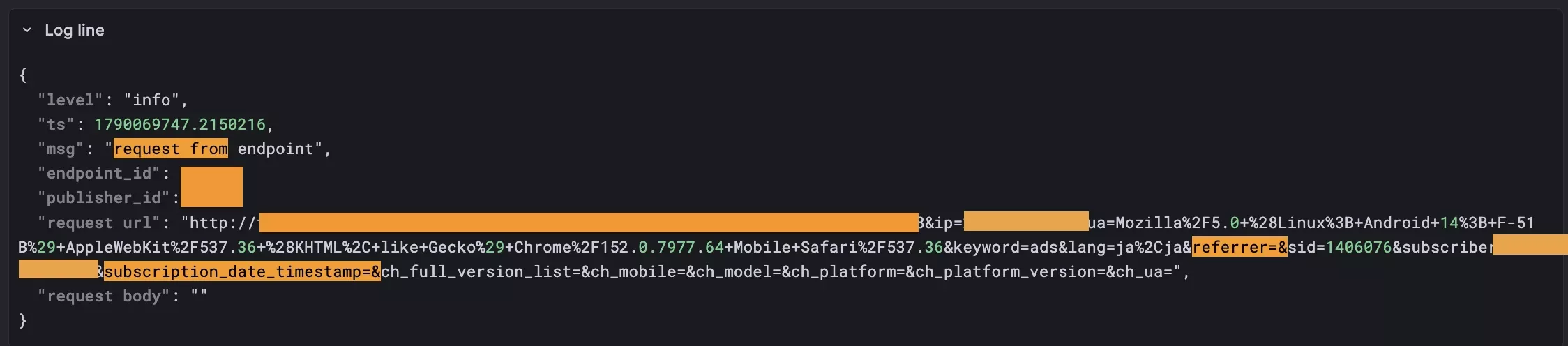
A bid request carries what a DSP needs to price one impression. It describes the site or app, the page, the device, the country and the user. It also states a floor price, the auction type and tmax, the number of milliseconds the exchange will wait for a bid, plus consent flags where privacy rules apply. Under OpenRTB only a request ID and an impression object are strictly required, so a request can be valid and still be nearly useless.

Missing fields cost money. When I onboard new supply partners at ADMY, two fields are missing more often than any others: the subscription date on push traffic and the referrer. Without the subscription date, a buyer cannot tell a fresh push subscriber from a year-old one. Without the referrer, it cannot judge where the visit came from, so many DSPs bid lower or skip the request.
What DSPs, SSPs, Exchanges and Ad Servers Do
DSPs buy, SSPs sell, ad exchanges run the auction between them, and ad servers deliver the ad once a deal is made. These four systems do the work in every programmatic trade. A data layer sits next to them on the buy side. Most programmatic solutions on the market are one of these systems, or a bundle of several.
| Component | Used by | What it does |
|---|---|---|
| Demand-side platform (DSP) | Advertisers, agencies | Evaluates bid requests and bids on impressions that match campaign rules |
| Supply-side platform (SSP) | Publishers, app owners | Offers inventory to many buyers at once and enforces floor prices |
| Ad exchange | Both sides, through DSPs and SSPs | Runs the auction and settles the transaction |
| Ad server | Publishers and advertisers | Stores creatives, picks the ad to deliver, counts impressions and clicks |
| Data management platform (DMP) | Advertisers, agencies | Builds audience segments that DSPs use for targeting |
Demand-side platform (DSP)
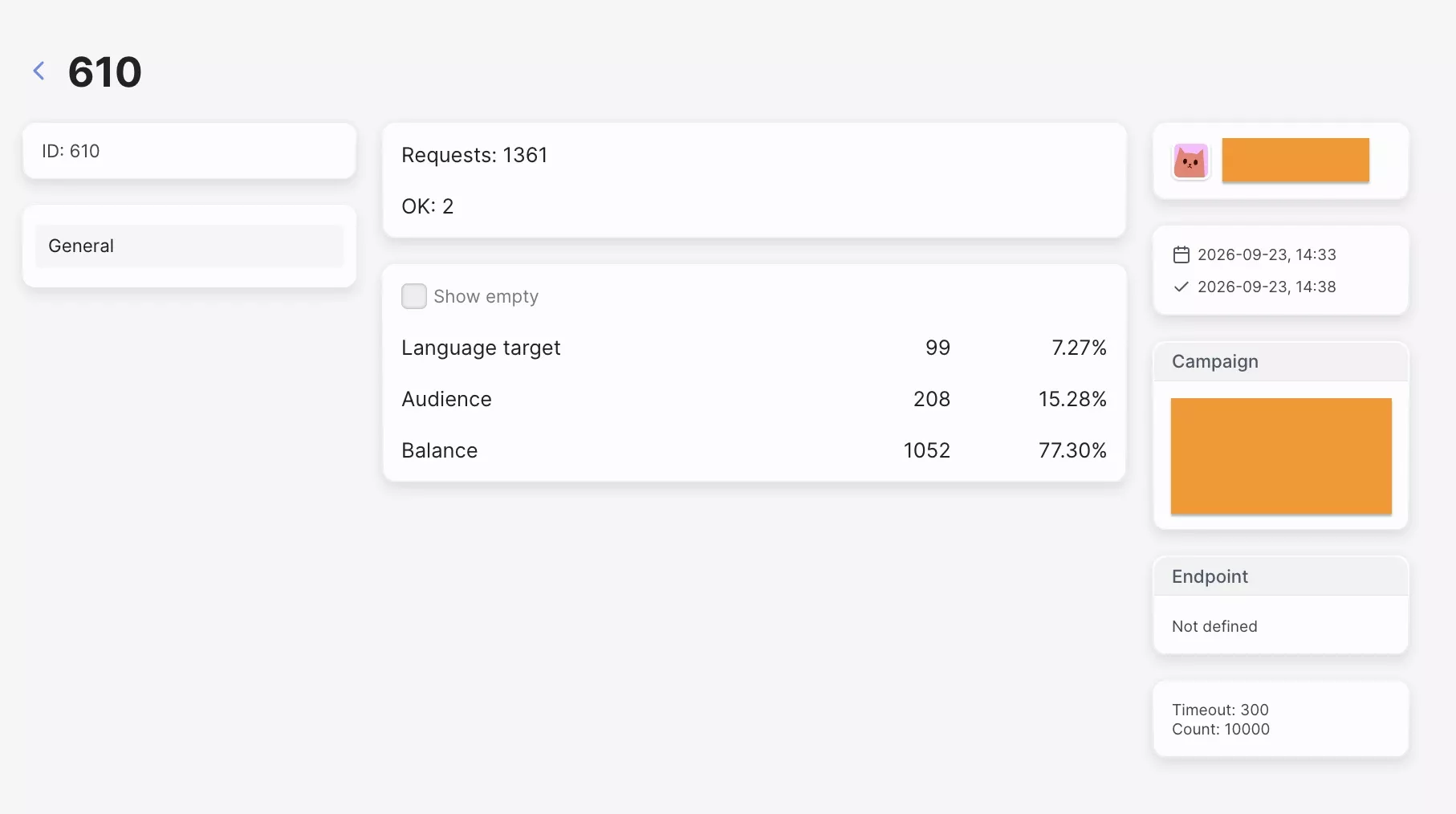
A demand-side platform decides which impressions are worth paying for. The advertiser sets targeting, budget, bid strategy and creatives inside it. The DSP receives bid requests from many exchanges and SSPs, and answers only the ones that match. Requests drop out for plain reasons too: the wrong language, an audience the campaign does not target, or a campaign with no balance left.
For agencies, the DSP is also the product they sell. Clients see its interface and its reports, and pay the margin built into it. That is why some agencies run a DSP under their own brand instead of reselling access to someone else's.
Supply-side platform
A supply-side platform earns the publisher money by putting more buyers on the same slot. One site connected through an SSP meets bids from many DSPs and exchanges at once. The publisher sets floor prices there, blocks unwanted advertiser categories and decides which deals get first access.
Publishers rarely rely on a single SSP. Header bidding lets a page ask several SSPs and exchanges for bids at the same time, before the publisher's ad server is called. The highest offer wins, instead of the first partner in a fixed waterfall. Most publishers run it through Prebid.js, an open-source library.
Ad exchange and ad server
An ad exchange runs the auction, and an ad server decides what gets delivered. The exchange is a marketplace: it takes inventory from SSPs, sends bid requests to DSPs, picks the winner and settles the money. The ad server stores creatives, chooses which ad to show among the deals that won, and counts impressions and clicks.
An ad network is a third system. It collects inventory from many publishers and resells it in packages, with its own pricing. Many networks now plug into exchanges too.
Four Types of Programmatic Deals
Programmatic deals come in four types. They differ in who can buy, whether an auction takes place and whether volume is reserved. The open auction is what most people mean by RTB, and the other three types of programmatic advertising deals add access rules or fixed terms.
| Deal type | Who can buy | Auction | Price | Volume |
|---|---|---|---|---|
| Open auction (RTB) | Any connected buyer | Yes | Set by bids above the floor | Not reserved |
| Private marketplace (PMP) | Invited buyers only | Yes | Set by bids, floor agreed per deal | Not reserved |
| Preferred deal | One buyer with first look | No | Fixed in advance | Not reserved |
| Programmatic guaranteed | One buyer | No | Fixed in advance | Reserved |
Private deals now carry most of the money at the premium end of the market. In the ANA Programmatic Transparency Benchmark for Q4 2025, private marketplaces took over 92% of median spend and all connected TV transactions. The open auction is still where performance buyers and smaller advertisers find scale, because it needs no negotiation before the first impression.
Channels and Ad Formats
Programmatic advertising buys ads across display, native, video, audio, connected TV and digital out-of-home. Performance formats such as push, pop and in-page are bought the same way. Display is a format and programmatic is a way of buying it, so a programmatic ad can take any of these shapes.
Connected TV takes the largest share of premium budgets. CTV reached 47.5% of programmatic spend among advertisers tracked in ANA's Q1 2026 benchmark, up from about 40% in Q4 2025.
ADMY runs six formats: pop, push, in-page, native, video and banner. The first three are bought mostly for conversions. A pop opens the advertiser's page in a new tab or window. A push ad arrives as a browser notification to users who subscribed to a site's alerts, and in-page push shows the same notification-style banner inside the page, without any subscription.
Targeting Data Behind Bids
Every bid is priced on targeting data, and in 2026 that data still includes third-party cookies in Chrome. Programmatic marketing uses four kinds of signals: first-party data from the advertiser's site or CRM, context from the page, location from IP or device, and behavioral audiences built from past visits. The more of them a request matches, the more a DSP will pay.
Chrome never dropped third-party cookies. Google confirmed in April 2025 that it would keep its current approach. On October 17, 2025 it retired most Privacy Sandbox technologies, including the Topics, Protected Audience and Attribution Reporting APIs, citing low adoption. Safari blocks third-party cookies by default and Firefox isolates them per site, so cookie reach depends on the browser mix of the traffic you buy.
Retargeting is one of the most used behavioral tactics. A pixel marks visitors of the advertiser's site, and the DSP bids on them when they show up in bid requests elsewhere. ADMY Retargeting starts every campaign at 2 impressions per user per day, and I raise the cap to 5 only for a source that keeps converting cheaply. Retargeted inventory on the ADMY exchange costs the same as broad targeting.
Fees, Traffic Quality and Privacy Rules
Three things shape what an ad budget actually buys: fees, traffic quality and privacy rules. Part of every dollar pays the platforms that carry the impression, the DSP, the SSP and the exchange. A shorter chain of intermediaries leaves more of the budget for the ads people actually see.
Not every impression offered in an auction is worth paying for. Some traffic comes from software rather than people, so an exchange checks supply before buyers ever bid on it. Sites built by AI to collect ad money are the newest example, and they look normal in the automatic tests. TAG and the ANA put them at 1.3-2.4% of open web programmatic spend in 2026, so buyers add a list of approved sites on top of those tests.
Every bid request carries data about the person seeing the ad, so privacy law applies to it. In Europe, a site asks for consent before it stores cookies, and that consent travels with the request in a format the whole industry reads. In the US the rules are set state by state, and a person's opt-out travels the same way. The platforms pass these signals along automatically, so the choice left to an advertiser is which data to use and where to run ads.
What Programmatic Costs
There is no list price in programmatic advertising. Most inventory sells per thousand impressions (CPM), and the auction sets the final number. What an advertiser pays depends on format, geo, audience size, deal type and competition at that moment.
The publisher's floor price sets the minimum, and the auction type decides the rest. Say the floor is $1.00 and two DSPs bid $2.10 and $1.80. In a first-price auction the winner pays its own bid of $2.10, and in a second-price auction it pays $1.81, a cent above the runner-up. That gap is why DSPs use bid shading to trim bids toward the likely clearing price.
Prices also differ by deal type. Among large brand advertisers tracked by the ANA in early 2026, the average CPM was $4.42: $7.77 in private marketplaces and $3.58 in the open auction. Performance formats such as push and pop clear at other prices, and they are often bought per click (CPC) instead.
The cheapest CPM is rarely the cheapest result. A low price usually comes with broader, less proven inventory, so the number worth comparing between platforms is cost per conversion.
Programmatic Advertising Examples
Four setups cover most programmatic advertising campaigns: three on the buy side, one built around who owns the platform. The auction technology is the same in all four. Only the goal and the level of control change.
Performance advertisers buy push and pop traffic in the open auction, targeting by country, device and operating system. Conversions come back through postbacks. Sources that do not convert are switched off within days, and the budget moves to placements that pay back.
In retargeting, a pixel collects visitors who left the advertiser's site without buying, and ads follow them elsewhere. ADMY Retargeting runs this as a turnkey service. The client configures nothing: strategy, creatives and campaigns stay on the ADMY side.
Brands with strict placement rules buy through a private marketplace. The publisher invites a small set of buyers and agrees a floor per deal. The brand gets premium placements with auction pricing and a known list of sites.
An agency or ad network runs programmatic ad campaigns for clients on a platform under its own brand. Instead of building the stack, it licenses a white label DSP, ad exchange or ad network constructor, which ADMY launches under the client's brand and domain within 24 hours. These teams are the ones I help most often, and their mistakes at launch are almost always technical, with postback setup at the top of the list.
Frequently asked questions
Is programmatic advertising the same as display advertising?
No. Display describes the ad format, meaning a banner in a page slot. Programmatic describes how that slot was bought. A banner can be sold either way, and programmatic also covers video, native, audio, connected TV, push and pop inventory that is not displayed at all.
What is the difference between programmatic and Google Ads?
Google Ads is one buying platform with access to its own inventory and network; programmatic is the wider market of exchanges where many platforms bid for inventory from many publishers. Buying inside a single company's ecosystem means accepting its rules on which verticals and creatives are allowed, while an open exchange sets its own. Most advertisers end up using both.
What is OpenRTB?
OpenRTB is the technical standard that defines how a bid request and a bid response are formatted, maintained by IAB Tech Lab. It is the reason a DSP built by one company can bid into an exchange built by another without a custom integration for each pairing.
How long does an RTB auction take?
About 100 milliseconds end to end. Buyers are given a fixed timeout, and a bid arriving after it is discarded regardless of price.
What is the difference between a DSP and an SSP?
The DSP works for the buyer and the SSP works for the seller. An advertiser uses a DSP to choose targeting and set bids; a publisher uses an SSP to choose formats, set a floor price and decide which demand partners may bid on their inventory. Both connect to the same auction from opposite sides.
What is a bid floor?
A bid floor is the lowest price an auction will accept for an impression, set by the publisher or the platform. Bids below the floor are discarded before the auction runs. On AdsCompass the CPC floors run from $0.0003 for Pop to $0.001 for Push, and the CPM floors from $0.001 for Banner to $0.1 for Native, Video Pre-roll and Telegram Rewarded Video.
Is programmatic advertising worth it for a small business?
It depends on whether you can absorb a learning budget. The entry cost is low, but the first few hundred dollars buy data rather than customers, and a business that needs every dollar to convert immediately will find a direct placement or a search campaign less punishing. Programmatic rewards testing, and testing costs money before it saves any.
Does programmatic advertising use personal data?
It can. The OpenRTB specification allows a bid request to carry user and device identifiers, so the honest answer depends on the exchange and the jurisdiction. On AdsCompass the request carries contextual signals - country, device, operating system, browser, ISP, connection type and time - and not identity.

More articles
[All articles]
 Iliya Dowlasov